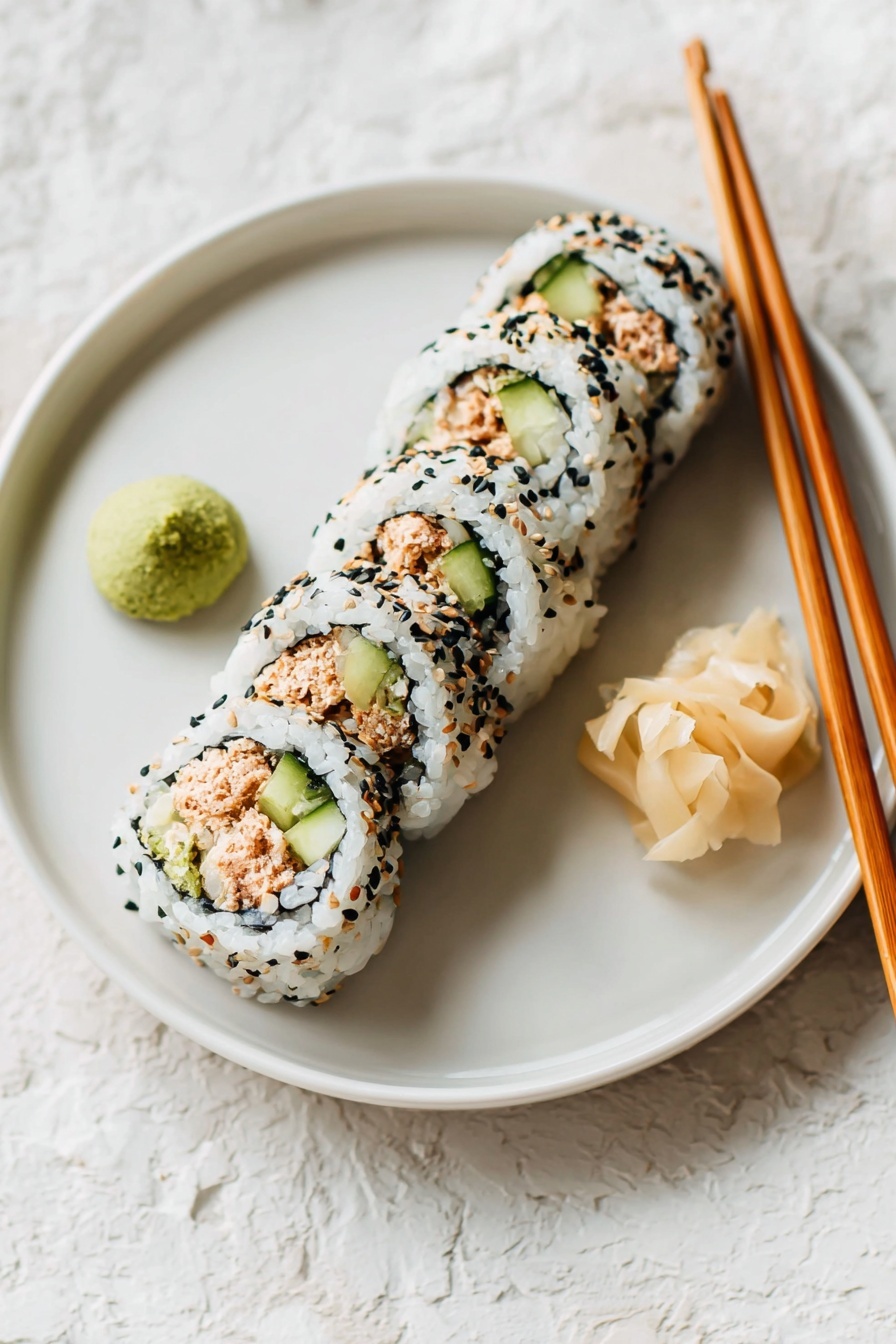
If you’re craving a sushi experience that mixes that creamy, spicy kick with fresh, crunchy veggies, you’re going to love this Spicy Tuna Sushi Roll Recipe. I absolutely love how this rolls out—it’s flavorful, satisfying, and honestly, way easier than I expected the first time I tried it. You’ll find that making sushi at home isn’t as intimidating as it seems once you get the hang of it, and this recipe is the perfect place to start!
Why You’ll Love This Recipe
- Simple Ingredients: Uses pantry staples and canned tuna for a quick yet delicious homemade sushi option.
- Perfect Balance of Flavors: Creamy mayo and sriracha spice blend beautifully with fresh cucumber and avocado.
- Customizable Heat: You control the spice level by adjusting the sriracha and gochugaru.
- Great for Beginners: Clear steps and easy assembly make it ideal if you’re new to sushi rolling.

Ingredients You’ll Need
Each ingredient plays its part to build that spicy, fresh sushi flavor combo—it’s all about balance here. Make sure to pick good quality sushi rice and fresh veggies for the best results.

- Tuna: I use canned tuna well-drained for ease, but sashimi-grade tuna works too if you want to get fancy.
- Mayonnaise: Adds creaminess that tames the heat from the chili sauce.
- Sriracha chili sauce: This is your main spice element—start with less and add more to suit your heat preference.
- Gochugaru (Korean chili powder): Optional, but it gives a nice smoky depth and vibrant color.
- Green onion: A little crunch and fresh, mild onion flavor.
- Sesame oil: Just a touch brings a subtle nuttiness that lifts the tuna mixture.
- Sushi rice: Short-grain rice is key for that sticky texture that holds the roll together.
- Rice vinegar and sugar: Season the rice perfectly with this sweet and tangy combo.
- Nori sheets: Make sure they’re fresh and crisp for a nice rolling experience.
- White and black sesame seeds: For extra flavor and an appealing look on the rice layer.
- Cucumber: Cut into long sticks for crunch and freshness.
- Avocado: Adds creamy buttery texture—a sushi roll classic!
Variations
I love mixing things up with this spicy tuna sushi roll recipe depending on what’s in season or what I’m craving. Don’t hesitate to personalize it—after all, sushi is such a versatile dish!
- Use fresh tuna instead of canned: For a more authentic sushi experience, try fresh sashimi-grade tuna diced finely and mixed with the spicy mayo blend.
- Vegan option: Swap tuna with mashed chickpeas or seasoned tofu for a plant-based twist that still packs flavor.
- Add crunchy tempura flakes: I like to add tempura flakes inside the roll sometimes for an extra crisp texture that my family goes crazy for.
- Spice it up further: If you love heat, drizzle a bit of extra sriracha or add pickled jalapeños inside the roll.
How to Make Spicy Tuna Sushi Roll Recipe
Step 1: Mix Your Spicy Tuna Filling
Start with draining your canned tuna really well—that’s key to avoid soggy rolls. Combine tuna with mayonnaise, sriracha (start with one tablespoon—add more if you like it hotter), a pinch of gochugaru if you have it, chopped green onion, and a teaspoon of sesame oil. Give everything a good mix until creamy and set aside. The flavors meld beautifully while you prep the rice.
Step 2: Prepare the Perfect Sushi Rice
Wash the sushi rice thoroughly until the water runs clear—this removes excess starch and helps the rice cook evenly. Cook it according to your rice cooker or stovetop instructions. While the rice is still hot, mix up your seasoning by warming rice vinegar and sugar until dissolved, then gently fold it into the rice like you’re cutting it rather than stirring, to keep it fluffy. Let it cool to room temp before assembling.
Step 3: Roll It Up!
Wrap your bamboo sushi mat with plastic wrap (trust me, it makes cleanup easier). Lay one nori sheet shiny side down, then spread a thin, even layer of sushi rice on top, leaving about an inch free at the edges. Sprinkle sesame seeds evenly over the rice, then flip the nori sheet over so the rice is on the bottom. This way you’ll get that smooth nori side on the outside, which makes for a better bite and presentation.
Now add a third of your spicy tuna filling in a line along the edge closest to you, along with cucumber sticks and avocado slices. Use the sushi mat to carefully roll it away from you, tucking the filling in as you go, and apply gentle pressure to shape a firm, round roll.
Step 4: Slice and Serve
Use a sharp serrated knife dipped frequently in water to cut your roll into ¾ – 1 inch pieces—you’ll get clean cuts and avoid squashing your sushi. Don’t be shy about trimming off the ends for tidier pieces; I always do this because those ends tend to be uneven. Arrange your rolls on a plate and serve with soy sauce, wasabi, and pickled ginger for the full experience.
Pro Tips for Making Spicy Tuna Sushi Roll Recipe
- Drain Tuna Thoroughly: I learned the hard way that excess moisture ruins sushi texture—use a fine mesh strainer or paper towels.
- Don’t Overload Rice: Thin rice layers spread evenly prevent the roll from falling apart or becoming too dense.
- Keep Your Knife Wet: Dipping your knife in water between cuts keeps the slices clean—no sticking or crushing.
- Use Plastic Wrap on Your Mat: Makes rolling smooth and faster cleanup, especially with sticky rice sticking everywhere!
How to Serve Spicy Tuna Sushi Roll Recipe

Garnishes
I always serve my spicy tuna sushi rolls with a dab of wasabi and thin slices of pickled ginger—these bring that traditional sushi restaurant vibe right to your table. Sprinkle some extra toasted sesame seeds on top for a lovely nutty aroma, and sometimes, a few flecks of chopped green onion to brighten things up.
Side Dishes
Some steamed edamame or miso soup make a perfect companion dish. If you want to keep things light, simple seaweed salad or pickled vegetables add freshness without overpowering the sushi.
Creative Ways to Present
I like to arrange the sushi slices in a circular fan on a large plate, garnished with edible flowers and thin radish slices for a pop of color. For special occasions, serving sushi on a wooden sushi board along with small dipping bowls for soy sauce and wasabi elevates the presentation and makes it feel festive and authentic.
Make Ahead and Storage
Storing Leftovers
If you have leftovers (which is rare!), wrap the sushi rolls tightly in plastic wrap and place them in an airtight container in the fridge. They’re best eaten within 24 hours, though the texture of the rice softens over time.
Freezing
I’ve tried freezing spicy tuna sushi rolls once out of curiosity, and honestly, I don’t recommend it. The rice texture suffers and veggies get soggy. If you need to meal prep, make the spicy tuna filling in advance and assemble fresh for best taste.
Reheating
Sushi is best enjoyed fresh, so reheating isn’t recommended. If you do want to warm the rice portion without cooking the fish, you can microwave the rice on its own briefly, but most of the time, I just enjoy any leftovers cold or at room temperature.
FAQs
-
Can I use fresh tuna instead of canned in this Spicy Tuna Sushi Roll Recipe?
Absolutely! Fresh sashimi-grade tuna can be finely diced and mixed with the spicy mayo ingredients for a more authentic sushi experience. Just keep everything chilled and handle the fish carefully for safety.
-
How spicy is this spicy tuna sushi roll recipe?
The heat level can be adjusted by changing how much sriracha or gochugaru you add. I usually start with 1 tablespoon of sriracha and taste. You can always add more if you like it fiery!
-
What type of rice is best for sushi rolls?
Short-grain sushi rice is best because it’s sticky and holds together well when rolled. Avoid long-grain rice since it’s too dry and won’t stick properly.
-
Can I make spicy tuna sushi rolls without a bamboo mat?
While a bamboo mat helps shape and roll neatly, you can try using a clean kitchen towel wrapped in plastic wrap or even your hands if you’re careful. The mat just makes things easier!
Final Thoughts
Making sushi at home doesn’t have to be a big production, and this Spicy Tuna Sushi Roll Recipe is my go-to for when I want that delicious sushi flavor fast and fuss-free. I love how customizable it is and how it brings a little restaurant magic straight into my kitchen. Give it a try—I promise you’ll be impressed with what you can create, and your friends and family will definitely ask for seconds!
Print
Spicy Tuna Sushi Roll Recipe
- Prep Time: 30 minutes
- Cook Time: 15 minutes
- Total Time: 45 minutes
- Yield: 3 sushi rolls (8-10 pieces per roll)
- Category: Sushi
- Method: Stovetop
- Cuisine: Japanese
Description
A vibrant and flavorful Spicy Tuna Sushi Roll made with canned tuna, creamy mayonnaise, spicy sriracha, and crunchy fresh vegetables, wrapped in nori seaweed with seasoned sushi rice. Perfect for sushi lovers seeking a quick and delicious homemade roll.
Ingredients
Spicy Tuna Filling
- 1 can tuna, well drained
- 1 tablespoon mayonnaise
- 1-2 tablespoons sriracha chili sauce, to your taste
- 1 tablespoon gochugaru (Korean chili pepper powder), optional
- 1 green onion, chopped
- 1 teaspoon sesame oil
Sushi Rice
- 1 cup short-grain sushi rice, washed
- 2 tablespoons rice vinegar
- 1 teaspoon granulated sugar
Other Ingredients
- 3 sheets seaweed nori
- White sesame seeds, for sprinkling
- Black sesame seeds, for sprinkling
- 1/2 cucumber, cut into long sticks
- 1 avocado, sliced
Instructions
- Prepare the Spicy Tuna Filling: In a bowl, combine the drained canned tuna with mayonnaise, sriracha sauce, gochugaru chili powder (if using), chopped green onion, and sesame oil. Mix well until all ingredients are thoroughly incorporated. Set aside.
- Prepare the Sushi Rice: Rinse the short-grain sushi rice under cold water until the water runs clear to remove excess starch. Place the washed rice into a rice cooker and add water according to your rice cooker’s instructions. Cook the rice until tender and fluffy.
- Make the Rice Seasoning: In a small saucepan, combine the rice vinegar and granulated sugar. Heat gently and stir until the sugar is completely dissolved. Remove from heat and let cool slightly.
- Season the Rice: Transfer the cooked rice to a large bowl. Gradually pour the vinegar and sugar mixture over the rice. Use a rice paddle or wooden spoon to gently fold and cut through the rice to evenly distribute the seasoning without mashing the grains. Allow the rice to cool to room temperature.
- Assemble the Sushi Rolls: Wrap your bamboo sushi mat with plastic wrap to prevent sticking. Place a sheet of nori seaweed shiny side down on the mat. Take a handful of seasoned sushi rice and evenly spread it over the nori, leaving about 1 inch clear at the top and bottom edges. Sprinkle white and black sesame seeds evenly over the rice.
- Flip and Fill: Carefully flip the seaweed sheet so the rice faces downward on the mat. Along the edge closest to you, evenly spread about one-third of the spicy tuna filling, and arrange a few cucumber sticks and avocado slices alongside the tuna.
- Roll the Sushi: Using the bamboo mat, tightly roll the seaweed sheet away from you, pressing gently to form a firm, round sushi log. Ensure the roll is tightly sealed.
- Cut the Sushi: Using a sharp serrated knife dipped in water (to prevent sticking), slice the sushi roll into pieces about ¾ to 1 inch thick. For neat presentation, trim off the ends before slicing the remainder of the roll.
- Serve: Arrange the sushi pieces on a plate and serve with wasabi, pickled ginger, and soy sauce on the side if desired.
Notes
- Yields 3 full sushi rolls, each cut into 8-10 pieces.
- Use a sharp serrated knife and dip it in water before slicing to get clean cuts without squashing the roll.
- Adjust the spiciness by varying the amount of sriracha chili sauce and gochugaru.
- If you do not have a bamboo sushi mat, you can use plastic wrap to assist in rolling.
- Leftover sushi rice can be covered and refrigerated for up to a day, but it is best fresh.
Nutrition
- Serving Size: 1 roll (approx. 8-10 pieces)
- Calories: 320
- Sugar: 4 g
- Sodium: 450 mg
- Fat: 12 g
- Saturated Fat: 2 g
- Unsaturated Fat: 8 g
- Trans Fat: 0 g
- Carbohydrates: 36 g
- Fiber: 4 g
- Protein: 18 g
- Cholesterol: 40 mg