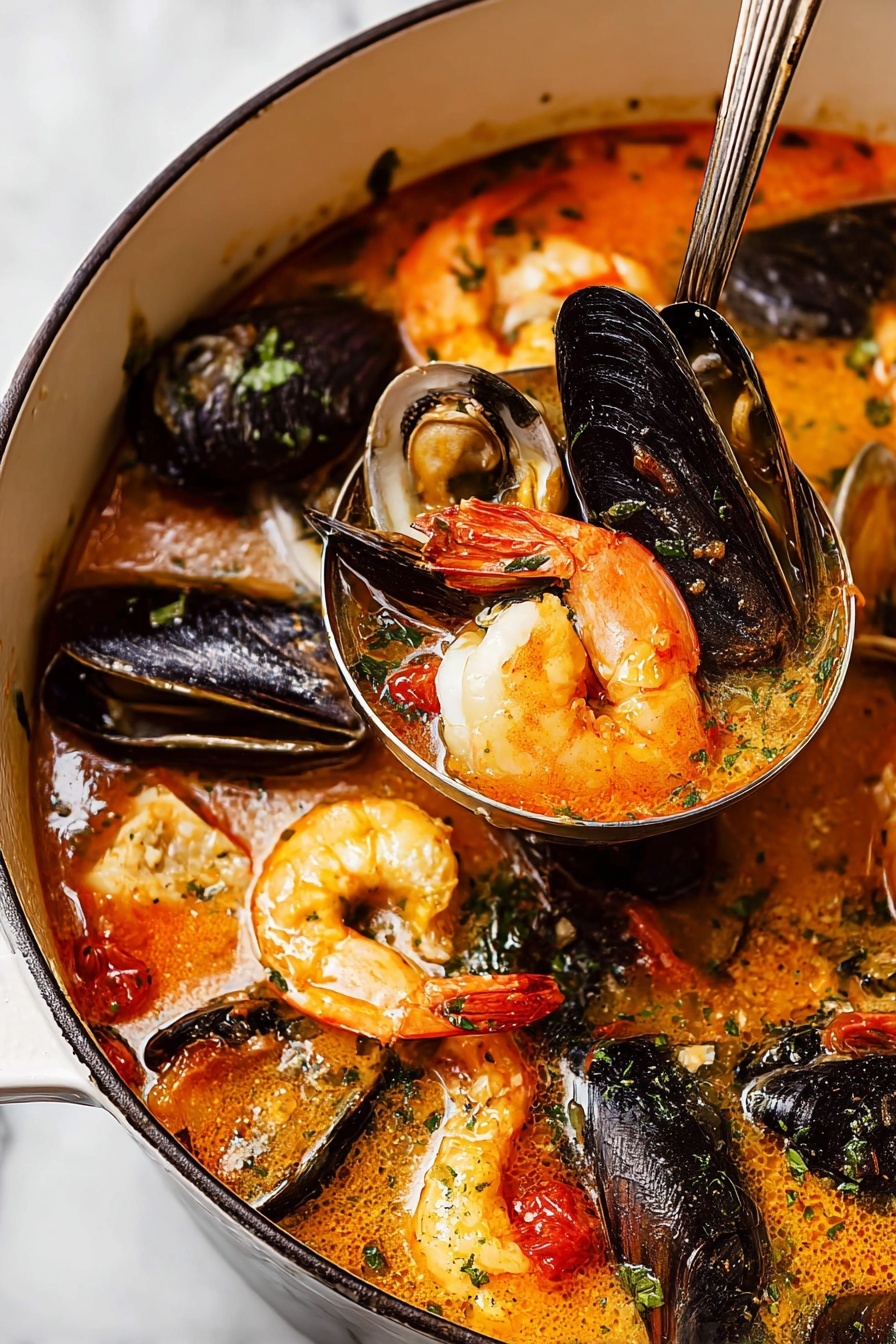
If you’re craving a dish that feels like a warm hug from the sea, look no further than this Seafood Bouillabaisse Recipe. I absolutely love how this classic French seafood stew brings together a symphony of flavors from fresh fish, shellfish, and aromatic herbs—plus, it’s really straightforward to make at home. Once you dive into this recipe, you’ll find it’s not just a meal; it’s an experience you’ll want to share with family and friends. So, let’s jump right into crafting a pot of magic that’ll have everyone asking for seconds!
Why You’ll Love This Recipe
- Authentic Flavors: This recipe nails the classic French seafood stew with saffron and fennel for genuine taste.
- Easy to Follow: Even if you’re new to seafood stews, the steps guide you through a foolproof process.
- Versatile Seafood Mix: Combines halibut, mussels, scallops, and shrimp for a delightful texture and flavor contrast.
- Perfect for Sharing: Big batch friendly for family dinners or entertaining guests with minimal stress.

Ingredients You’ll Need
The ingredients in this Seafood Bouillabaisse Recipe work beautifully together to create a rich, savory broth bursting with seafood goodness. When shopping, look for the freshest seafood you can find—trust me, it’s worth the little extra effort. Also, don’t skip the saffron; it really elevates the dish in an unforgettable way.

- Olive oil: Use good quality extra virgin for that fruity, peppery base flavor.
- Butter: Adds creaminess and richness balancing the herbs and spices.
- Fennel bulb: Gives a subtle aniseed flavor that’s essential for authenticity.
- Yellow onion: Provides sweetness and depth once sautéed.
- Garlic: Fresh minced garlic fills the broth with warmth and aroma.
- Dried thyme, paprika, saffron threads, and cayenne pepper: These spices create the signature fragrant, slightly spicy, and colorful broth.
- Dry white wine: The acidity brightens the stew and complements the seafood.
- Clam juice or seafood stock: The foundational liquid packed with ocean flavor.
- Canned diced tomatoes: Adds acidity, sweetness, and a beautiful red hue.
- Bay leaves: Infuse subtle herbal notes to round out the soup.
- Halibut filets: A firm white fish that won’t fall apart in the stew.
- Mussels: Fresh, scrubbed, and debearded for that briny bite.
- Sea scallops: Sweet and tender, make sure tendons are removed.
- Raw shrimp: Peeled and deveined for easy eating.
- Fresh basil and parsley: Stirmed in at the end for vibrant freshness.
- Red pepper flakes (optional): For a little extra kick if you like heat.
- Toasted baguette slices (optional): Perfect for dipping into the luscious broth.
Variations
One of the things I adore about this Seafood Bouillabaisse Recipe is how easy it is to make it your own. Whether you want to tweak the types of seafood, accommodate dietary needs, or even amp up the spice, there’s room to experiment without losing that signature flavor.
- Add Lobster or Crab: For a more luxurious take, adding lobster chunks or fresh crab meat is a winner—my guests always rave about it.
- Vegetarian Version: Skip the seafood and use hearty vegetables like artichokes, potatoes, and roasted bell peppers with rich vegetable stock for a bouillabaisse-inspired stew.
- No Wine? Use chicken broth and a splash of lemon juice or a dash of Dijon mustard to mimic the acidity and complexity.
- Spice It Up: Double up the cayenne and red pepper flakes if you love some serious heat.
How to Make Seafood Bouillabaisse Recipe
Step 1: Cook the Aromatics
Start by heating the olive oil and melting the butter in a large Dutch oven over medium-high heat. Once that’s shimmering and delicious, add the chopped fennel and diced onion. They should cook gently for about 5 minutes until softened and fragrant—stir often so nothing burns. Then stir in the garlic, thyme, paprika, saffron threads, and a pinch of cayenne pepper; cook everything just for about 20 seconds until you can smell those beautiful spices blooming. This step is crucial—it sets the stage for the whole stew!
Step 2: Add Liquids and Tomatoes
Pour in the white wine, using your spoon to scrape all those tasty browned bits off the pot’s bottom—that’s flavor gold. Let it simmer for a minute to reduce slightly, then add the clam juice or seafood stock, diced tomatoes with their juices, and the bay leaves. Bring this mixture to a boil, then lower the heat and let it gently simmer for 8 to 10 minutes until the liquid shrinks by about half. This concentrated broth will make your boule a pure delight!
Step 3: Prepare and Add the Fish
While the broth simmers, season the halibut pieces with salt and pepper, then nestle them carefully into the pot. Turn the heat down to medium-low, cover, and let it cook for just 2 minutes. The halibut is firm but delicate, so this short cooking time keeps it tender and perfect.
Step 4: Cook the Shellfish and Shrimp
Next, add in your mussels and sea scallops, cover again, and cook for 3 minutes. Then uncover and add the shrimp, cover one last time, and cook for an additional 2 to 3 minutes or until the shrimp are opaque, the mussels have opened (discard any that don’t open), and the scallops feel slightly firm to the touch. This staged cooking ensures everything is perfectly done and not overcooked.
Step 5: Finish and Serve
Remove the pot from heat, fish out and toss the bay leaves, then stir in fresh chopped basil and parsley for a pop of color and freshness. Season with salt and pepper to your taste, and if you like a little heat, sprinkle some red pepper flakes on top when serving. Ladle the bouillabaisse into wide bowls and don’t forget those toasted baguette slices—they’re perfect for soaking up the rich broth.
Pro Tips for Making Seafood Bouillabaisse Recipe
- Choose Fresh Seafood: I’ve learned that fresh, firm seafood makes all the difference—avoid anything that smells fishy or slimy.
- Layer Your Flavors: Don’t rush sautéing the aromatics and spices; this is where the signature flavor builds.
- Cook Seafood in Stages: Adding fish, then shellfish, then shrimp at different times prevents overcooking.
- Don’t Skip the Saffron: It’s an investment but worth it—it gives that authentic color and subtle floral aroma you can’t replicate.
How to Serve Seafood Bouillabaisse Recipe
Garnishes
I usually keep garnishes simple to highlight the flavors—freshly chopped basil and parsley stirred in at the end bring brightness. Sometimes, I sprinkle red pepper flakes for a little spice kick. And don’t forget a good drizzle of quality olive oil on top before serving if you want to add richness.
Side Dishes
To make the meal complete, I always serve toasted baguette slices alongside, perfect for soaking up every last drop of the broth. A crisp green salad with a lemon vinaigrette or a simple ratatouille pairs beautifully too, balancing the flavors and textures.
Creative Ways to Present
For special occasions, I love serving the bouillabaisse in individual rustic earthenware bowls layered with mixed seafood. Adding a small ramekin of rouille (a garlicky mayonnaise) alongside the bread adds a delightful traditional touch. It’s always a crowd-pleaser and makes the meal feel truly festive.
Make Ahead and Storage
Storing Leftovers
I usually store leftovers in airtight containers in the fridge, but since seafood can be delicate, I recommend eating within 1-2 days for the best flavor and texture. When reheating, gentle warming is key to avoid rubbery shellfish.
Freezing
Freezing bouillabaisse isn’t my go-to, but if you want to, freeze the broth separately without the seafood and add fresh seafood when reheating. This keeps the textures intact and flavors fresh.
Reheating
Reheat gently on the stovetop over low heat, stirring occasionally. If needed, add a splash of broth or water to loosen the stew. Avoid microwaving, which can toughen the seafood. I find slow warming tastes just like freshly made!
FAQs
-
Can I use other types of fish for this Seafood Bouillabaisse Recipe?
Absolutely! While I love using halibut because it holds its shape well, you can substitute cod, snapper, or any firm white fish. Just avoid delicate fleshed fish like sole that can fall apart during cooking.
-
What if I don’t have saffron? Can I still make bouillabaisse?
Saffron is iconic for bouillabaisse and adds a unique aroma and color, but if unavailable, you can substitute with a pinch of turmeric for color and a bit more paprika for warmth. The flavor won’t be exactly the same, but it’ll still taste great.
-
Is it okay to make this seafood dish without wine?
Yes! If you’d prefer not to cook with wine, swap it with chicken broth mixed with a little lemon juice or vinegar for acidity. This tweak keeps the broth bright and balanced.
-
How do I know when the mussels are cooked and safe to eat?
Cook mussels until their shells open wide—this typically happens quickly, in just a few minutes. Discard any mussels that stay closed after cooking as they may not be safe to eat.
Final Thoughts
When I first tried this Seafood Bouillabaisse Recipe, I was amazed by how layering simple ingredients with care could result in something so extraordinary. It’s one of those recipes where the process is just as rewarding as the finished dish. Whether you’re treating yourself or impressing guests, this stew warms the soul and fills the house with incredible aromas. Trust me, once you make it, it’ll become a favorite go-to whenever you want a touch of something special. So grab your apron, gather fresh seafood, and let’s make some magic—because you deserve it.
Print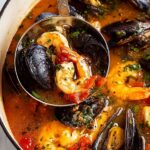
Seafood Bouillabaisse Recipe
- Prep Time: 10 minutes
- Cook Time: 20 minutes
- Total Time: 30 minutes
- Yield: 8 servings
- Category: Soup
- Method: Stovetop
- Cuisine: French
Description
A classic French seafood stew combining a medley of fresh fish, shellfish, aromatic herbs, and spices, slow-simmered to create a rich, flavorful bouillabaisse.
Ingredients
Seafood
- 1 pound halibut filets, cut into 3-inch pieces
- 12 ounces mussels, scrubbed and debearded
- 1 pound sea scallops, tendons removed
- 8 to 10 ounces raw shrimp, peeled and deveined
Aromatics and Spices
- 3 tablespoons olive oil
- 1 tablespoon butter
- 1 fennel bulb, cored and finely chopped
- 1 small yellow onion, diced
- 8 cloves garlic, minced
- ¼ teaspoon dried thyme
- ¼ teaspoon paprika
- ¼ teaspoon saffron threads
- ⅛ teaspoon cayenne pepper
Liquids and Produce
- 1 cup dry white wine
- 4 cups clam juice (or seafood stock)
- 14 ounces canned diced tomatoes, undrained
- 2 bay leaves
Herbs and Garnishes
- 2 tablespoons finely chopped fresh basil
- 1 tablespoon finely chopped fresh parsley
- Red pepper flakes, for garnish (optional)
- Toasted baguette slices, for serving (optional)
Instructions
- Cook the aromatics: Heat the olive oil and melt the butter in a large Dutch oven set over medium-high heat. Add the chopped fennel and onion and cook for about 5 minutes, or until softened, stirring frequently to prevent burning. Then stir in the garlic, thyme, paprika, saffron, and cayenne pepper; cook for 20 seconds until fragrant.
- Add the liquids and tomatoes: Pour in the dry white wine, scraping up any browned bits from the bottom of the pot. Cook for 1 minute. Add the clam juice (or seafood stock), canned diced tomatoes with their juices, and the bay leaves to the pot.
- Simmer: Bring the mixture to a boil, then reduce the heat to medium and let it simmer for 8 to 10 minutes, or until the liquid reduces by half and the flavors concentrate.
- Prep the fish: Season the halibut pieces with salt and freshly ground black pepper. Add them to the pot, reduce heat to medium-low, cover, and cook for 2 minutes to start cooking the fish gently.
- Add and cook the remaining seafood: Nestle the mussels and scallops into the pot, cover again, and cook for an additional 3 minutes. Remove the lid, add the shrimp, cover, and cook for 2 to 3 more minutes, or until the shrimp turns opaque, mussels open, scallops are firm, and halibut is fully cooked.
- Finish: Remove the pot from heat. Discard the bay leaves and any unopened mussels. Stir in the fresh basil and parsley. Taste the bouillabaisse and adjust seasoning with salt and pepper as needed.
- Serve: Ladle the bouillabaisse into wide bowls, garnish with optional red pepper flakes, and serve immediately with toasted baguette slices on the side.
Notes
- Choosing seafood: Mix firm fish, shrimp, mussels, and scallops for a variety and authentic flavor.
- Seasoning is key: Don’t skimp on saffron, garlic, and fennel—they bring signature depth.
- Slow cooking melds flavors beautifully; avoid rushing the simmering process.
- If omitting wine, substitute with chicken broth plus a dash of Dijon mustard or water mixed with a bit of vinegar.
- Enhance flavor further by adding tomato paste during sautéing or a touch of citrus zest if not using wine.
Nutrition
- Serving Size: 1 bowl (approx. 1.5 cups)
- Calories: 250 kcal
- Sugar: 4 g
- Sodium: 800 mg
- Fat: 10 g
- Saturated Fat: 2.5 g
- Unsaturated Fat: 7 g
- Trans Fat: 0 g
- Carbohydrates: 12 g
- Fiber: 3 g
- Protein: 25 g
- Cholesterol: 115 mg