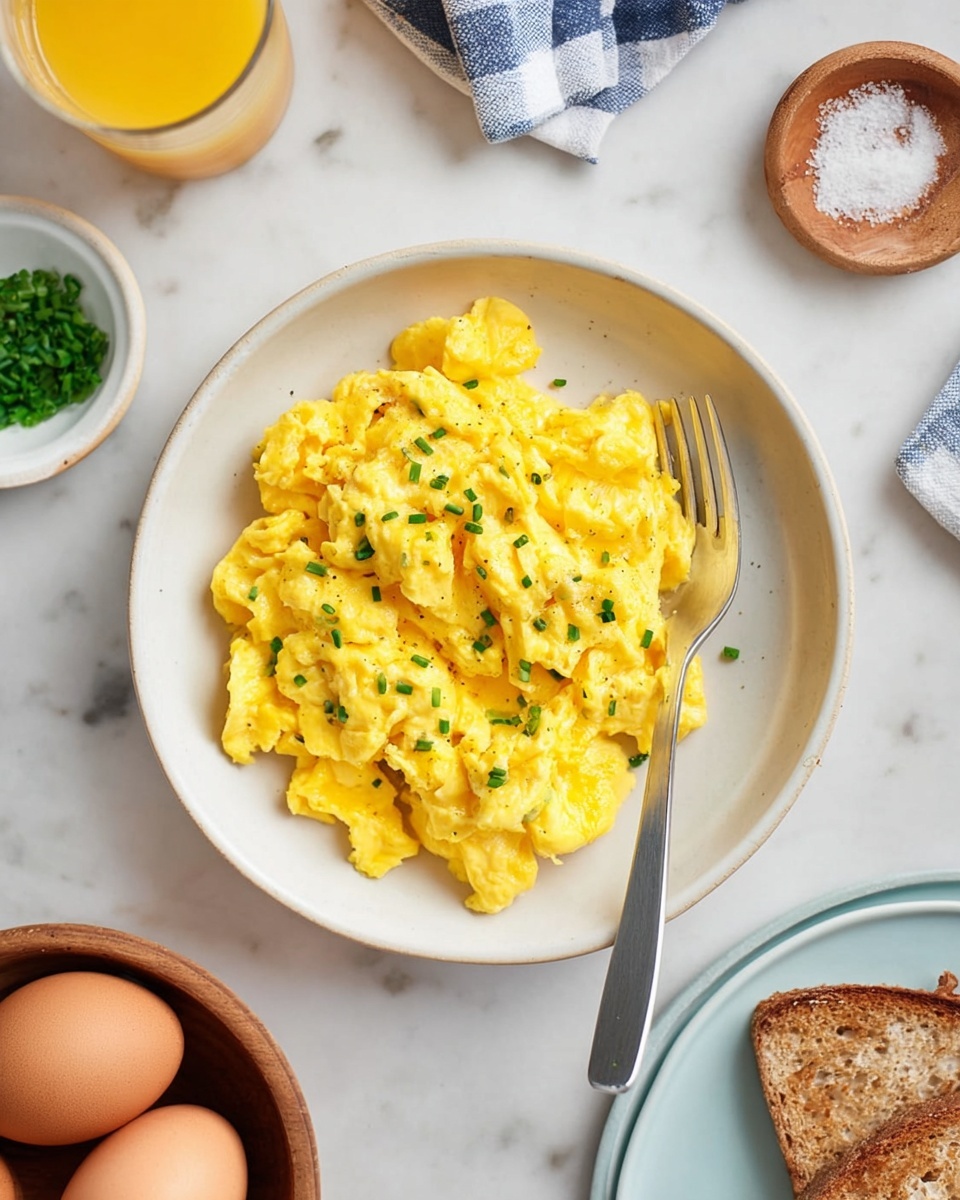
If you’ve ever wondered how to make scrambled eggs that are soft, creamy, and absolutely delicious, you’re in the right place. I’m sharing my Perfect Scrambled Eggs Recipe with you — one that I’ve refined over countless breakfasts and that never fails to impress. Whether you’re a beginner or just looking to perfect your technique, you’ll find this recipe easy to follow and incredibly rewarding. Trust me, once you nail these eggs, your mornings will never be the same!
Why You’ll Love This Recipe
- Incredibly Creamy Texture: This method yields eggs that are soft and silky, not dry or rubbery.
- Simple Ingredients: You only need a handful of kitchen staples that most people have on hand.
- Quick and Easy: Ready in under 5 minutes, perfect for busy mornings or lazy brunches.
- Customizable Flavor: Add a splash of milk, water, or your favorite plant milk for a personal touch.

Ingredients You’ll Need
The beauty of my Perfect Scrambled Eggs Recipe is how simple the ingredients are — yet they come together to create something that feels indulgent. Choosing fresh eggs and quality cooking fat makes a big difference, so I’ll share some tips on that as well.
- Large eggs: Fresh eggs always make better scrambled eggs—look for pasture-raised or organic if possible.
- Milk, plant milk, or water: Adding a little liquid helps lighten up the texture; I personally use whole milk but almond milk works great too.
- Extra-virgin olive oil or butter: Butter gives a rich flavor, but olive oil is a lighter alternative that still adds great taste.
- Sea salt and freshly ground black pepper: Seasoning is key—salt enhances flavors, and fresh pepper adds a nice little kick.
- Chopped fresh chives (optional): I love this fresh garnish for a pop of color and a mild onion flavor.
Variations
One of the things I love most about this Perfect Scrambled Eggs Recipe is how easy it is to customize. Feel free to add your favorite flavors or tweak it to fit your dietary needs—scrambled eggs are wonderfully forgiving.
- Add cheese: I sometimes throw in a sprinkle of cheddar or feta toward the end for an extra creamy, cheesy boost—my family goes crazy for it.
- Herbs and spices: Beyond chives, fresh dill, parsley, or even a pinch of smoked paprika bring great flavor twists.
- Dairy-free: Swap milk for oat or almond milk and use olive oil for cooking instead of butter for a lighter, vegan-friendly option.
- Veggie-packed: Adding sautéed mushrooms, spinach, or tomatoes makes this a heartier, nutritious meal.
How to Make Perfect Scrambled Eggs Recipe
Step 1: Whisk the Eggs Until Smooth
Crack your eggs into a medium bowl and add a teaspoon of milk, plant milk, or water. I really recommend whisking them until the mixture is uniform and smooth—no streaks of egg white visible. This is key for fluffy, even eggs. Use a fork or a whisk and don’t rush it; I usually whisk for about 30 seconds to really incorporate air.
Step 2: Heat Your Pan and Add Fat
Brush a small nonstick skillet with extra-virgin olive oil, or melt a pat of butter over medium heat. I find medium heat works best—not too hot or the eggs toughen up fast. When the fat starts to shimmer or the butter is foaming gently, your pan is ready for the eggs.
Step 3: Cook the Eggs Slowly, Folding Gently
Pour the eggs in and let them sit undisturbed for a few seconds so the bottom can begin to set. Then, using a rubber spatula, gently pull the eggs from the edges toward the center to form those large, soft curds. I like to keep the heat low and fold softly every few seconds—this slow cooking process is what makes all the difference.
Step 4: Remove from Heat Before Fully Set
This is something I learned the hard way—removing the skillet when the eggs are mostly set but still a bit runny stops overcooking. The heat reserves inside the pan finish the job perfectly, leaving you with creamy eggs, not dry ones. At this point, season generously with sea salt and pepper, then garnish with fresh chives if you like.
Pro Tips for Making Perfect Scrambled Eggs Recipe
- Low and Slow Cooking: Cooking eggs over medium-low heat gives you maximum control and creaminess without drying them out.
- Don’t Overbeat: While you want a smooth mix, overwhisking can make eggs tough; just enough to combine is perfect.
- Use a Rubber Spatula: It helps gently fold eggs and scrape the pan, perfect for soft curds without breaking them.
- Remove Early: Taking your eggs off the heat while still slightly runny avoids that dreaded overcooked texture.
How to Serve Perfect Scrambled Eggs Recipe
Garnishes
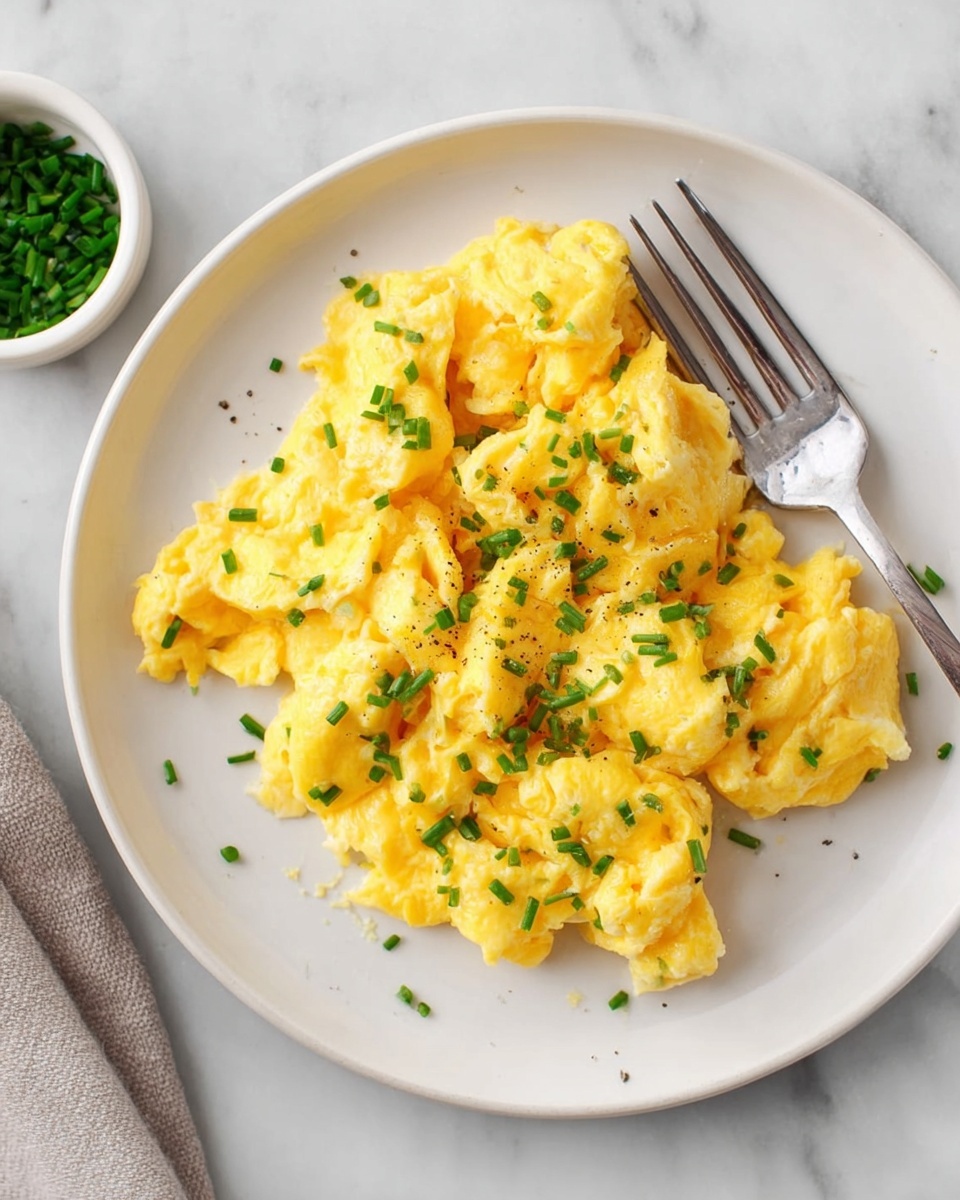
I always finish my scrambled eggs with a sprinkle of freshly chopped chives—it adds just the right touch of fresh, mild onion flavor. Other times, I love adding a little crumbled feta, a dash of smoked paprika, or even fresh basil for extra color and taste.
Side Dishes
For the perfect breakfast, I pair these eggs with buttered toast or a crusty baguette, crispy bacon, or sautéed mushrooms. Sometimes, my family enjoys them alongside grilled tomatoes or avocado slices for a fresh, healthy balance.
Creative Ways to Present
For special occasions, I’ve served my Perfect Scrambled Eggs Recipe inside toasted English muffins topped with smoked salmon and dill cream cheese—fancy but easy. You can also scoop eggs into warm tortillas with salsa and cheese for a quick breakfast taco twist.
Make Ahead and Storage
Storing Leftovers
Scrambled eggs are best enjoyed fresh, but if you have leftovers, store them in an airtight container in the refrigerator right away. I find they stay decent for up to 2 days, though the texture isn’t quite as creamy as when freshly made.
Freezing
Freezing scrambled eggs isn’t my favorite, but it’s possible in a pinch. Wrap them tightly in plastic wrap and store in a freezer-safe container. When thawed, they can be a bit watery, so I recommend using frozen eggs in casseroles or breakfast burritos rather than eating them solo.
Reheating
To reheat leftover scrambled eggs without drying them out, use low heat on the stovetop and stir frequently, or microwave briefly in short bursts. Adding a tiny splash of milk before reheating helps restore some creaminess.
FAQs
-
What makes scrambled eggs creamy and soft?
The key is cooking them gently over low heat while folding often and removing the eggs from the heat while still slightly runny. Adding a little milk or water also contributes to that creamy texture.
-
Can I use plant-based milk in this recipe?
Absolutely! Plant-based milks like almond, oat, or soy milk work just as well as dairy milk and can add a subtle flavor twist.
-
Should I whisk the eggs vigorously?
You want to whisk enough to combine the yolks and whites fully and add some air, but don’t overdo it as that can result in eggs that are less tender.
-
Is it better to use butter or olive oil for cooking?
Both work well! Butter adds richness and a classic flavor, while olive oil gives a lighter, fruity note. Feel free to use whichever you prefer or have on hand.
-
How do I avoid dry, rubbery scrambled eggs?
Cook the eggs slowly over low to medium-low heat, stir gently and frequently, and remove the pan from heat while the eggs are still slightly soft to prevent overcooking.
Final Thoughts
I absolutely love how this Perfect Scrambled Eggs Recipe turns out every single time. It’s my go-to for a quick breakfast that feels special without any fuss. When I first tried this method, I was amazed at how silky and tender the eggs were — and now, you’ll enjoy this same deliciousness in your kitchen. Give it a try, and soon scrambled eggs might just become your favorite comfort food. Plus, the best part? You can personalize it however you like and still get fantastic results. So grab those eggs, and let’s make your mornings a little brighter!
Print
Perfect Scrambled Eggs Recipe
- Prep Time: 2 minutes
- Cook Time: 3 minutes
- Total Time: 5 minutes
- Yield: 1 serving (suitable for 1 to 2 people)
- Category: Breakfast
- Method: Stovetop
- Cuisine: American
- Diet: Vegetarian
Description
Learn how to make soft, creamy, and flavorful scrambled eggs with this simple recipe. Perfect for a quick and delicious breakfast, these eggs are lightly seasoned and optionally garnished with fresh chives for added zest.
Ingredients
Egg Mixture
- 3 large eggs
- 1 teaspoon milk, plant milk, or water
For Cooking
- Extra-virgin olive oil or butter (for the pan)
- Sea salt and freshly ground black pepper (to taste)
- Chopped fresh chives (optional, for garnish)
Instructions
- Whisk the eggs: Crack the eggs into a medium bowl and add the milk or water. Whisk until the mixture is smooth and combined, ensuring no streaks of egg white remain.
- Prepare the skillet: Brush a small nonstick skillet with olive oil or melt a little butter in it. Place the skillet over medium heat and allow it to warm up.
- Begin cooking the eggs: Pour the egg mixture into the skillet. Let them cook undisturbed for a few seconds to start setting at the bottom.
- Form curds: Using a rubber spatula, gently pull across the bottom of the pan to create large, soft curds of scrambled eggs.
- Continue cooking and stirring: Reduce heat to medium-low and fold and stir the eggs every few seconds. Scrape the spatula along the bottom and sides of the pan often to form more curds and prevent the eggs from drying out.
- Finish cooking: Remove the skillet from the heat when the eggs are mostly set but still a little runny. This ensures they stay creamy.
- Season and garnish: Season with sea salt and freshly ground black pepper to taste. Garnish with chopped fresh chives if desired and serve immediately.
Notes
- Use fresh eggs for the best flavor and texture.
- Using a splash of milk or water results in creamier scrambled eggs.
- Cook over medium-low heat to avoid overcooking and achieve soft curds.
- Customize by adding cheese, herbs, or vegetables as desired.
Nutrition
- Serving Size: 1 serving
- Calories: 210 kcal
- Sugar: 1 g
- Sodium: 120 mg
- Fat: 15 g
- Saturated Fat: 5 g
- Unsaturated Fat: 9 g
- Trans Fat: 0 g
- Carbohydrates: 2 g
- Fiber: 0 g
- Protein: 14 g
- Cholesterol: 425 mg