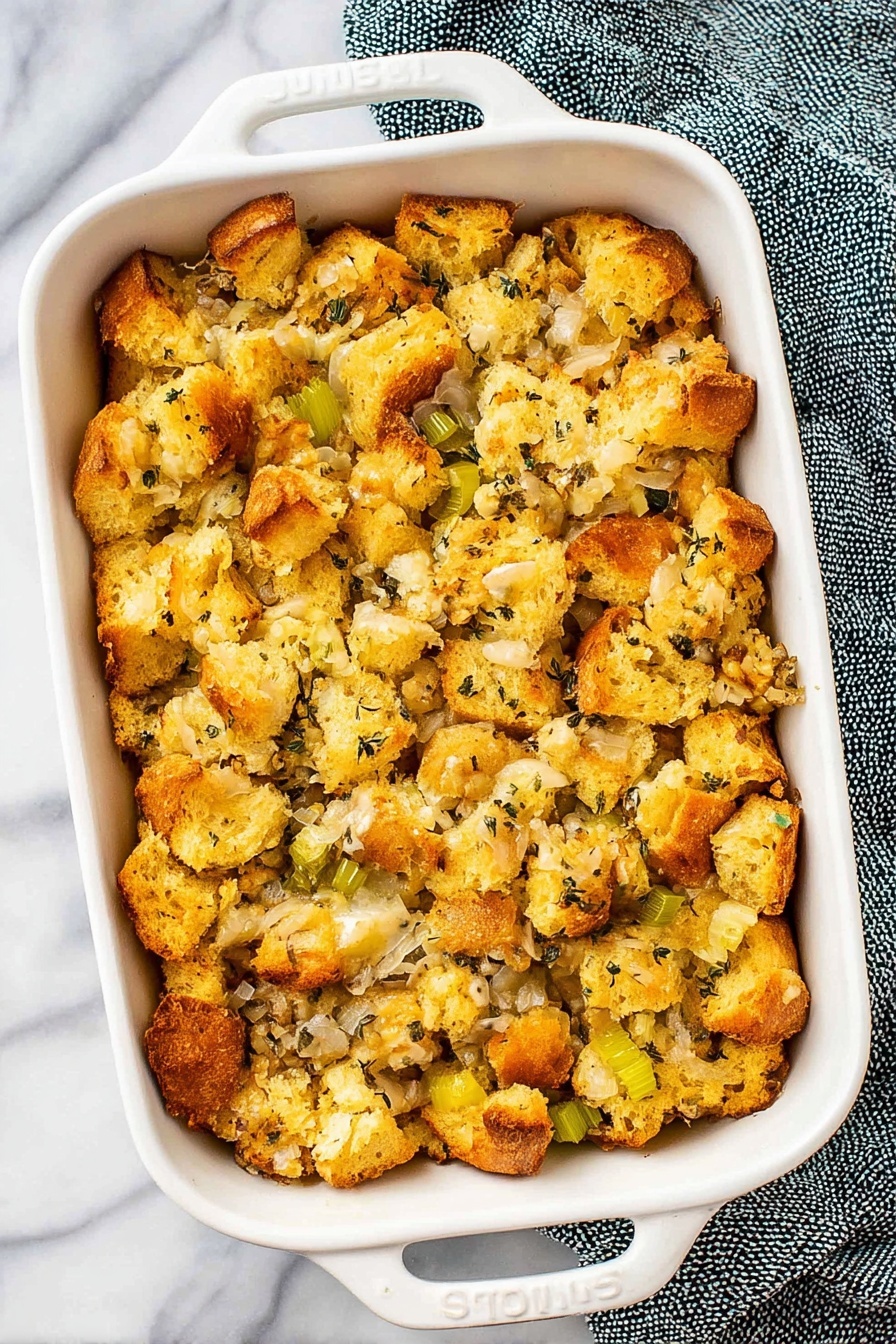
If you’ve ever hunted for the perfect holiday side or a comforting classic to pair with your roast, then you’re going to want to stick around. I’m sharing my absolutely favorite Homemade Stuffing Recipe with Sage and Herbs Recipe that’s bursting with fresh flavors, cozy aromas, and a texture that hits every spot just right. Trust me, once you try this, it’ll be your go-to stuffing that everyone asks for year after year.
Why You’ll Love This Recipe
- Fresh Herb Flavor: The combination of sage, thyme, and parsley gives it a fragrant, garden-fresh taste you can’t get from store-bought mixes.
- Perfect Texture: Toasting the bread cubes ahead ensures they absorb broth without turning mushy, so your stuffing is fluffy yet crispy on top.
- Make-Ahead Friendly: You can prep this stuffing a day in advance, saving you precious stress on busy cooking days.
- Family-Tested & Loved: My crew goes crazy for this one, and I bet yours will too.

Ingredients You’ll Need
Each ingredient here plays a key role in making this Homemade Stuffing Recipe with Sage and Herbs Recipe pop. You want good quality bread that crisps up nicely, fresh herbs for fragrance, and plenty of butter and broth to keep everything flavorful and moist.
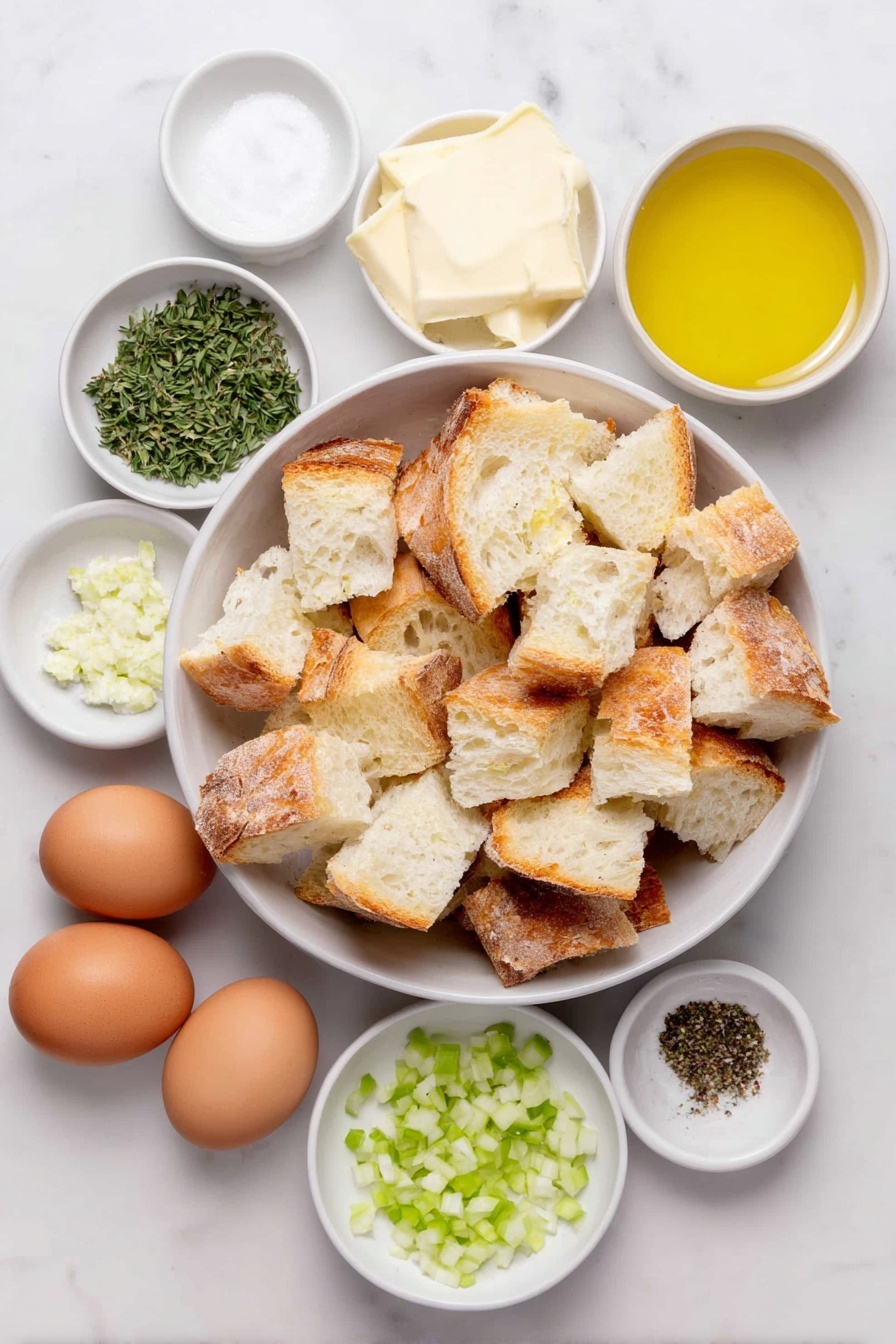
- Texas toast or French bread: Thickly sliced bread works best; I recommend day-old or slightly stale for better toasting.
- Unsalted butter: Helps control the saltiness and gives that rich, savory base.
- White or yellow onion: Adds sweetness and depth when softened just right.
- Celery stalks: Provides crunch and a classic flavor contrast.
- Kosher salt: For seasoning, enhances all the other flavors.
- Freshly cracked black pepper: Adds a little spicy bite to balance richness.
- Garlic: Minced fresh always beats pre-minced for aroma and punch.
- Fresh sage: The star herb in stuffing; don’t skimp on it, fresh is best.
- Fresh parsley: Balances the sage with a hint of brightness.
- Large eggs: Binds the stuffing so it holds together nicely.
- Chicken broth: Moistens the bread and infuses savory depth.
- Fresh thyme: Subtle herbaceous note to round out the flavors.
Variations
While I love this classic version, I’ve tried some tweaks that made the stuffing even more interesting and fit different tastes or dietary needs. Feel free to experiment a little — it’s your kitchen after all!
- Vegetarian: Swap chicken broth for vegetable broth and use olive oil instead of butter to keep it meat-free but packed with flavor. I’ve done this for friends who avoid meat and the results are just as comforting.
- Adding sausage: For a richer, heartier stuffing, I sometimes toss in cooked breakfast sausage; it adds a fantastic savory punch that my family can’t resist.
- Gluten-Free: Use gluten-free bread cubes and ensure broth is gluten-free; the herbs still shine through beautifully.
- Extra Herb Boost: Occasionally I mix in rosemary or marjoram when I want a bit more complexity. It’s subtle but elevates the herbal fragrance perfectly.
How to Make Homemade Stuffing Recipe with Sage and Herbs Recipe
Step 1: Toast Your Bread Cubes Just Right
Preheat your oven to 300°F and spread your cubed Texas toast or French bread on a baking sheet. Now, here’s where patience pays — toss those cubes every 8–10 minutes so they dry evenly without burning. This slow toast usually takes 40 to 60 minutes total. When done, the cubes will be crisp and golden but not browned — the perfect texture to soak up broth later without falling apart. I actually love to toast my bread cubes a day ahead and keep them in an airtight container. It saves so much time on the big cooking day!
Step 2: Sauté Onions, Celery, and Garlic
Turn the oven up to 350°F now, and while it heats, melt the butter in a large skillet. Add diced onion, sliced celery, and minced garlic, cooking gently for about 4 minutes until softened but not brown. This mixture becomes the aromatic foundation of your stuffing, so take your time here. You’ll smell the kitchen starting to smell like cozy fall already — my favorite moment!
Step 3: Combine Bread and Herb Mixture
Pour the buttery veggies over the toasted bread cubes and give them a toss to coat evenly. Sprinkle in the kosher salt, black pepper, fresh sage, and parsley, then toss again so every little cube gets that herbal love. I usually add a little more sage than the recipe calls for because I adore that slightly earthy, piney flavor.
Step 4: Add Eggs and Broth, Mix Gently
In a small bowl, whisk your eggs until smooth, then drizzle over the bread mixture. Follow with the chicken broth, pouring evenly for good absorption. Now, stir carefully — you want the cubes coated and moist but still shaped rather than completely mushy. If you like your stuffing extra moist (I’m definitely in that camp!), add half a cup more broth. Just remember to mix gently to keep a nice texture.
Step 5: Bake Covered, Then Uncover for a Golden Finish
Grease a 9×13 casserole dish and transfer your stuffing mixture inside. Cover tightly with foil for baking and pop it in the oven’s middle rack at 350°F. Bake for 30 minutes covered, then remove the foil and bake another 10–15 minutes uncovered to get that tempting browned top. This step seals the deal for the perfect contrast between creamy insides and crispy edges.
Pro Tips for Making Homemade Stuffing Recipe with Sage and Herbs Recipe
- Toast Bread Slow and Low: Don’t rush the bread drying process; it’s the secret to perfect texture and prevents soggy stuffing.
- Fresh Herbs Over Dried: I learned that fresh sage, thyme, and parsley make a huge difference – the flavor is brighter and more vibrant.
- Gentle Mixing: When adding broth and eggs, fold gently to keep some bread cube integrity – no one wants mushy stuffing!
- Avoid Overbaking: Pull it out as soon as it’s golden on top; overbaking dries it out and dulls the herbs’ freshness.
How to Serve Homemade Stuffing Recipe with Sage and Herbs Recipe
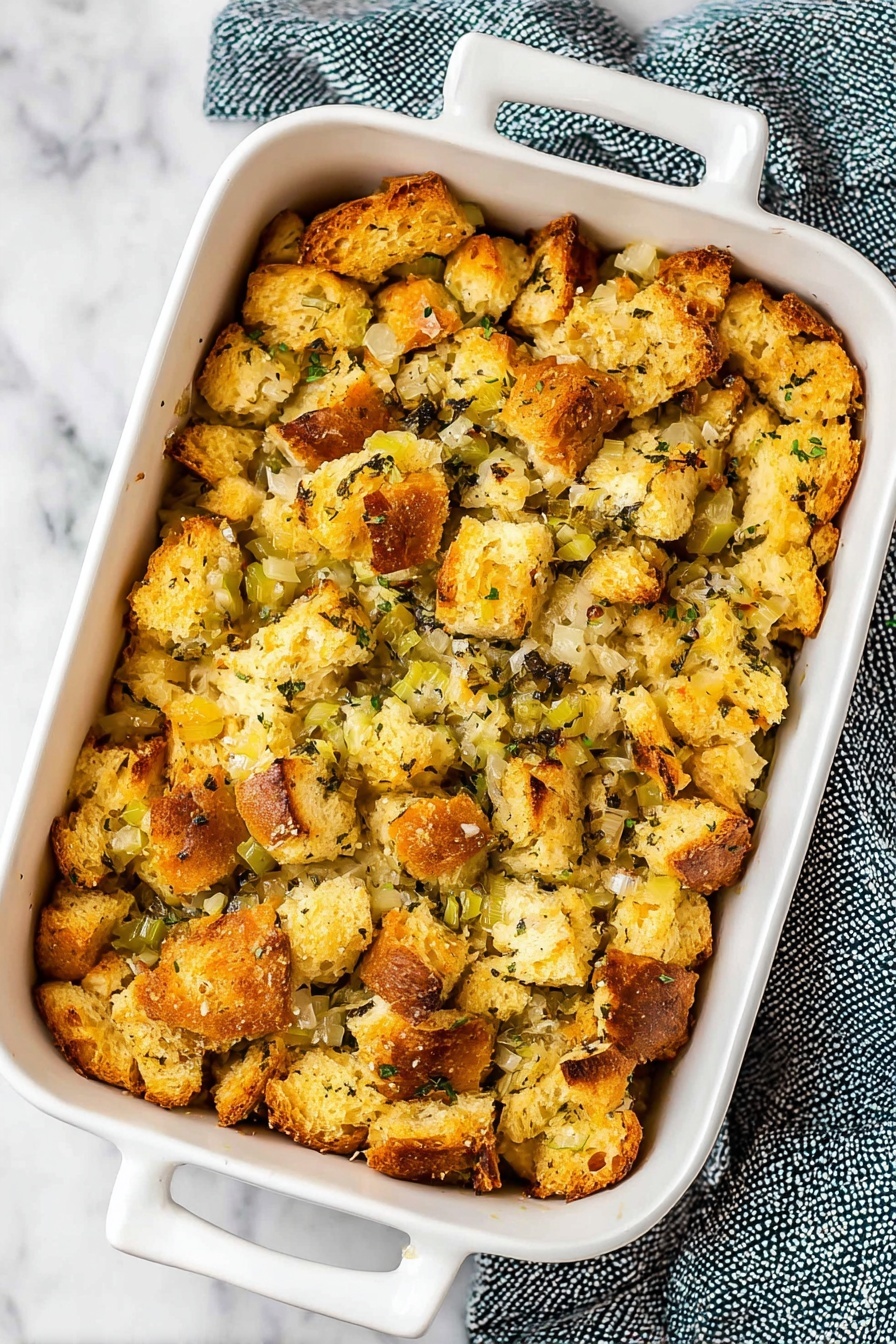
Garnishes
I love sprinkling a little extra chopped fresh parsley or some crispy fried sage leaves on top just before serving. It adds a pop of color and an extra layer of herbal aroma that’s so inviting. Sometimes, a pat of butter melting on top right out of the oven is pure perfection too.
Side Dishes
This stuffing pairs wonderfully with roasted turkey or chicken, caramelized Brussels sprouts, and mashed potatoes. For holiday meals, I often serve it alongside cranberry sauce to balance savory and sweet — a combo that always impresses my guests.
Creative Ways to Present
For special occasions, I like to bake the stuffing in individual ramekins or mini cast iron skillets. It’s super cute and makes each portion feel extra special. Another fun twist is pouching stuffing inside hollowed-out mini pumpkins or sweet bell peppers for a festive presentation that doubles as a conversation starter.
Make Ahead and Storage
Storing Leftovers
Leftover stuffing is a treat, and I always store mine in an airtight container in the fridge where it keeps beautifully for up to 5 days. When reheating, I’ve found that covering it loosely with foil and warming in the oven helps preserve the texture better than the microwave.
Freezing
If you want to freeze this Homemade Stuffing Recipe with Sage and Herbs Recipe, make sure it’s completely cooled before packing it in a freezer-safe container. I freeze portions separated with parchment paper for easy thawing. It lasts up to 3 months and still tastes fresh when baked or reheated gently.
Reheating
My favorite way to reheat stuffing is in a 350°F oven covered with foil for about 15–20 minutes, then uncovered for 5 minutes to crisp the top back up. This way, you get a freshly baked vibe with a warm, fluffy inside and a little golden crunch on top.
FAQs
-
Can I use dried herbs instead of fresh for this stuffing?
You can substitute dried herbs, but you’ll want to use about one-third the amount of fresh called for since dried herbs are more concentrated. However, fresh herbs really elevate the flavor and aroma, so if possible, stick to fresh for best results.
-
How do I make the stuffing less soggy?
The key is toasting your bread cubes thoroughly so they absorb broth without turning mushy. Also, adding broth gradually and stirring gently helps maintain texture. Avoid overcooking the stuffing, especially uncovered, to prevent drying out the top while keeping the inside moist but not soggy.
-
Can I prepare the stuffing fully ahead of time?
Yes! You can assemble the stuffing and refrigerate it covered for up to 24 hours before baking. When ready to bake, bring it to room temperature for about 30 minutes, then follow the baking instructions. This saves a lot of time on the day you serve it.
-
Is it okay to toast bread cubes in an air fryer?
Absolutely! Air frying is a fast and convenient way to toast bread cubes. Set it to 300°F and toss or stir the cubes every 5 minutes until crispy and dry, usually about 6 to 8 minutes per batch. Just keep an eye so they don’t burn.
Final Thoughts
This Homemade Stuffing Recipe with Sage and Herbs Recipe feels like the essence of cozy, home-cooked comfort for me. I love how the fresh herbs smell while cooking, and that perfect balance between moist and crisp always brings smiles to my table. Whether it’s Thanksgiving, Christmas, or just a weekend family dinner, this stuffing makes every meal feel special. I hope you give this a try and love it as much as my family and I do – I’m sure it’ll become a beloved tradition in your kitchen too!
Print
Homemade Stuffing Recipe with Sage and Herbs Recipe
- Prep Time: 1 hour 15 minutes
- Cook Time: 40 minutes
- Total Time: 1 hour 55 minutes
- Yield: 8 servings
- Category: Side Dish
- Method: Baking
- Cuisine: American
Description
This homemade stuffing recipe features perfectly toasted Texas toast bread cubes mixed with sautéed onions, celery, garlic, and fresh herbs, then moistened with eggs and chicken broth. Baked until golden and crispy on top, this classic side dish is ideal for holiday meals or comforting family dinners.
Ingredients
Bread
- 8 cups cubed Texas toast or French bread, about 1 loaf
Vegetables and Herbs
- 2 cups white or yellow onion, diced
- 3 celery stalks, sliced into ¼ inch pieces
- 1 tablespoon garlic, minced
- 2 tablespoons minced fresh sage
- ½ cup minced fresh parsley
- 1 tablespoon minced fresh thyme
Other Ingredients
- ½ cup (1 stick) unsalted butter
- ½ teaspoon kosher salt
- ½ teaspoon freshly cracked black pepper
- 3 large eggs, lightly beaten
- 1 ½ cups chicken broth (plus up to ½ cup more if desired)
Instructions
- Toast the Bread: Preheat oven to 300°F. Spread cubed bread on a baking sheet and bake for 40 to 60 minutes, stirring every 8 to 10 minutes until the cubes are dry and crispy. Remove and cool.
- Sauté Vegetables: Increase oven temperature to 350°F. In a large stovetop skillet, melt butter and cook onions, celery, and garlic over medium heat for about 4 minutes until softened.
- Combine Bread and Vegetables: Pour the sautéed vegetable and butter mixture over the toasted bread cubes in a large bowl. Add salt, pepper, sage, and parsley, then toss well to combine.
- Add Eggs and Broth: In a small bowl, whisk eggs until smooth. Pour evenly over bread mixture. Then add chicken broth gradually, tossing gently to moisten all cubes without breaking them. Add up to ½ cup extra broth if you prefer a moister stuffing.
- Prepare to Bake: Transfer mixture to a greased 9×13-inch casserole dish. Cover with foil. If not baking immediately, refrigerate for up to 24 hours before baking.
- Bake: Bake uncovered in the middle oven rack at 350°F for 30 minutes. Remove foil and continue baking for an additional 10 to 15 minutes until the top is browned and crispy. Serve warm.
Notes
- Store leftover stuffing in an airtight container in the fridge for up to 5 days.
- Make ahead by assembling and refrigerating covered but bake just before serving. Let sit at room temperature for 30 to 60 minutes before baking.
- Pre-cubed and toasted bread can be purchased from grocery stores to save time; use about 8 heaping cups.
- The bread cubes can be toasted a day ahead to simplify meal prep.
- To toast bread in an air fryer, place cubes in the basket at 300°F and stir every 5 minutes. Toast for 6 to 8 minutes per batch until dry and crispy.
Nutrition
- Serving Size: 1 cup
- Calories: 210
- Sugar: 2 g
- Sodium: 480 mg
- Fat: 10 g
- Saturated Fat: 6 g
- Unsaturated Fat: 4 g
- Trans Fat: 0 g
- Carbohydrates: 24 g
- Fiber: 2 g
- Protein: 6 g
- Cholesterol: 65 mg