If you’re craving a fresh, classic Italian pasta dish that’s both simple and bursting with flavor, you’re going to fall head over heels for this Easy Spaghetti Pomodoro Recipe. I absolutely love how this recipe transforms pantry staples into a comforting, vibrant sauce that coats every strand of spaghetti just perfectly. When I first tried this, I was surprised at how deeply flavorful it is, yet it feels light and fresh—just like a trip to Italy in your own kitchen. Ready to make a fan-freaking-tastic dinner tonight? Let me show you how!
Why You’ll Love This Recipe
- Uncomplicated Ingredients: You only need a few quality pantry staples to create a sauce that tastes like it simmered for hours.
- Perfectly Balanced Flavor: This pomodoro sauce hits that beautiful sweet-savory spot without any bitterness or heaviness.
- Versatile & Quick: It’s an easy recipe that comes together in about an hour but can be prepped in stages to fit your schedule.
- Ideal for All Skill Levels: Whether you’re a beginner or a seasoned pasta pro, you’ll nail this dish every time.

Ingredients You’ll Need
The ingredients here are straightforward and classic—each brings something special to the sauce. I always recommend using good-quality extra virgin olive oil and whole peeled tomatoes because they make a huge difference in flavor and texture.
- Extra virgin olive oil: Choose a fruity, fresh oil for the best flavor infusion.
- Garlic clove: Lightly crushed to release that irresistible aroma in the oil.
- Red pepper flakes (optional): Just a pinch adds a subtle kick if you like a little heat.
- Whole peeled tomatoes: Look for a high-quality, ripe canned tomato with a rich flavor.
- Kosher salt: Enhances all the natural goodness, so don’t skimp on seasoning.
- Basil branch (plus extra leaves): Fresh basil is key to that signature pomodoro brightness.
- Spaghetti (or choice of pasta): I stick with classic spaghetti, but feel free to use your favorite noodle.
- Freshly grated Parmesan cheese (optional): The perfect finishing touch for depth and richness.
Variations
While I adore the classic simplicity of this Easy Spaghetti Pomodoro Recipe, sometimes I like to play around with tweaks depending on what ingredients I have or the mood I’m in. You can easily customize it to suit your taste buds or dietary needs—and I encourage you to make it your own!
- Add protein: My family goes crazy when I toss in some sautéed shrimp or grilled chicken for a heartier meal.
- Make it vegan: Skip the Parmesan or use a plant-based cheese—still delicious and 100% comforting.
- Experiment with herbs: Try adding fresh oregano or thyme alongside basil for a unique flavor twist I discovered one summer.
- Spice it up: For a bolder version, increase the red pepper flakes or add a splash of spicy chili oil.
How to Make Easy Spaghetti Pomodoro Recipe
Step 1: Infuse the Olive Oil with Garlic and Heat
Start by warming about 1/4 cup of olive oil in a large saucepan over medium-low heat. Toss in the lightly crushed and peeled garlic clove and listen for that gentle sizzle—this is when the oil picks up the garlic’s aroma. Be sure not to let the garlic brown, as it can turn bitter. If you prefer a milder flavor, you can remove the garlic after a few minutes; I love leaving it in for a bolder taste. Don’t forget to add a pinch of red pepper flakes here if you want a little warmth in your sauce.
Step 2: Add and Mash the Tomatoes
Pour in the whole peeled tomatoes along with their juice very carefully—they can splatter a bit! Use a potato masher or a sturdy wooden spoon to gently break them into large, chunky pieces. Season with about 1/2 teaspoon of kosher salt and turn the heat up to medium-high until the mixture comes to a boil.
Step 3: Simmer and Develop the Sauce
Once boiling, lower the heat to maintain a gentle simmer. Partially cover the pan to let some steam escape while the sauce thickens. Stir every now and then to avoid sticking. I like to let it simmer for 35 to 40 minutes until the sauce darkens and the oil pools on top. If it thickens too fast before it tastes rich and sweet, I add a splash of water to keep it balanced.
Step 4: Strain for a Silky Smooth Texture
Take the sauce off the heat and let it cool for about 10 minutes. Then, strain it through a fine mesh strainer or use a food mill to press the tomatoes into a smooth, velvety sauce. This step I learned makes a huge difference—no chunky bits, just a perfect, classic texture. Return the sauce to the pan and taste—add a pinch more salt if it needs it.
Step 5: Add Final Olive Oil and Basil Simmer
Stir in the remaining 2 tablespoons of olive oil. Add a fresh basil branch on top and bring the sauce back to a gentle simmer over medium heat. Let it cook softly for about 15 minutes so the basil infuses its lovely aroma. Then, remove and discard the basil branch (saving a few leaves for garnish is always a good idea) and keep the sauce warm.
Step 6: Cook the Spaghetti and Toss Together
Bring a large pot of salted water to a rolling boil—you’ll want it well salted so the pasta tastes amazing. Cook the spaghetti until just al dente according to the package instructions. Use tongs or a pasta fork to transfer the hot noodles directly into the sauce—no draining needed! Add a splash of the starchy pasta water, turn the heat to low, and toss everything together for about 2 minutes until the pasta is perfectly coated.
Step 7: Serve and Enjoy!
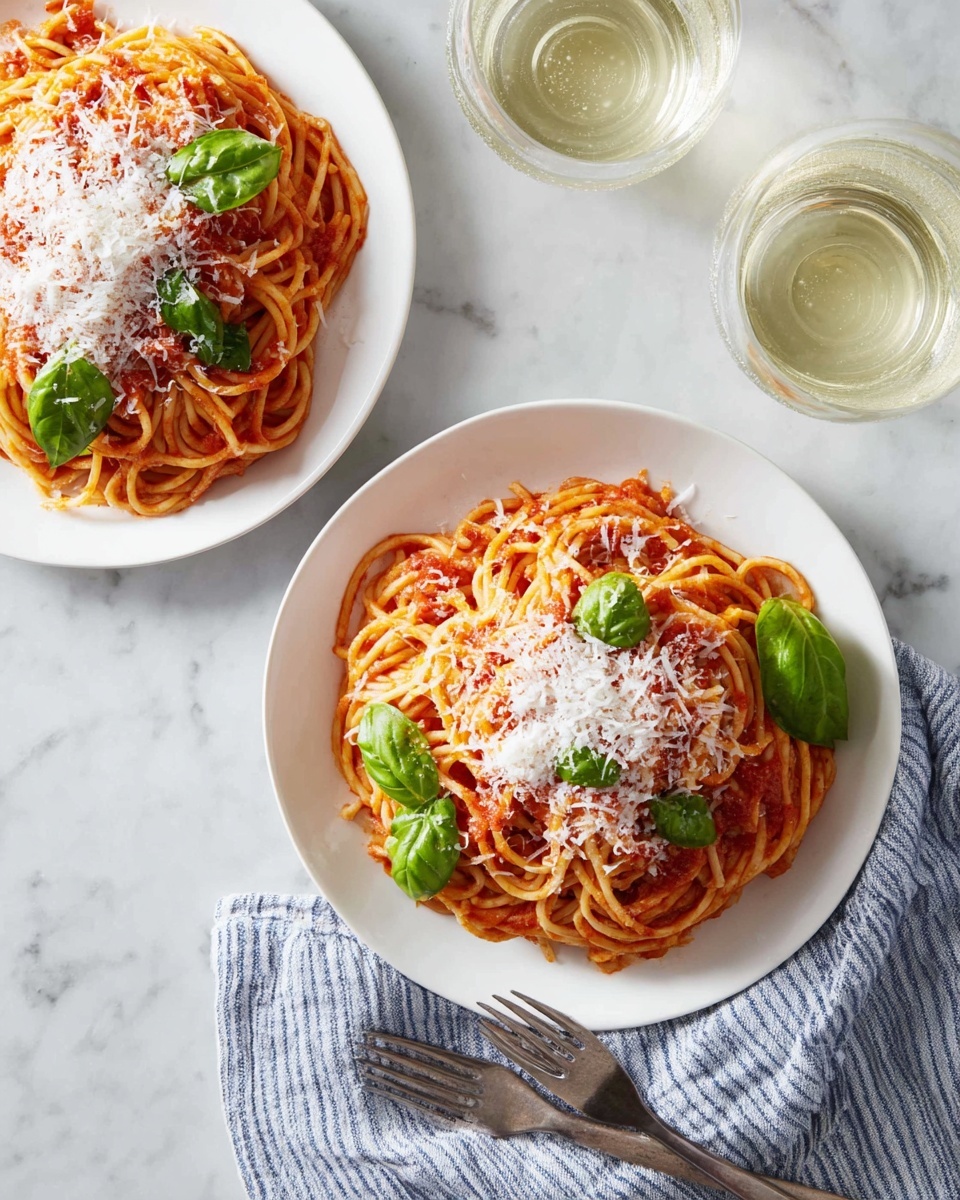
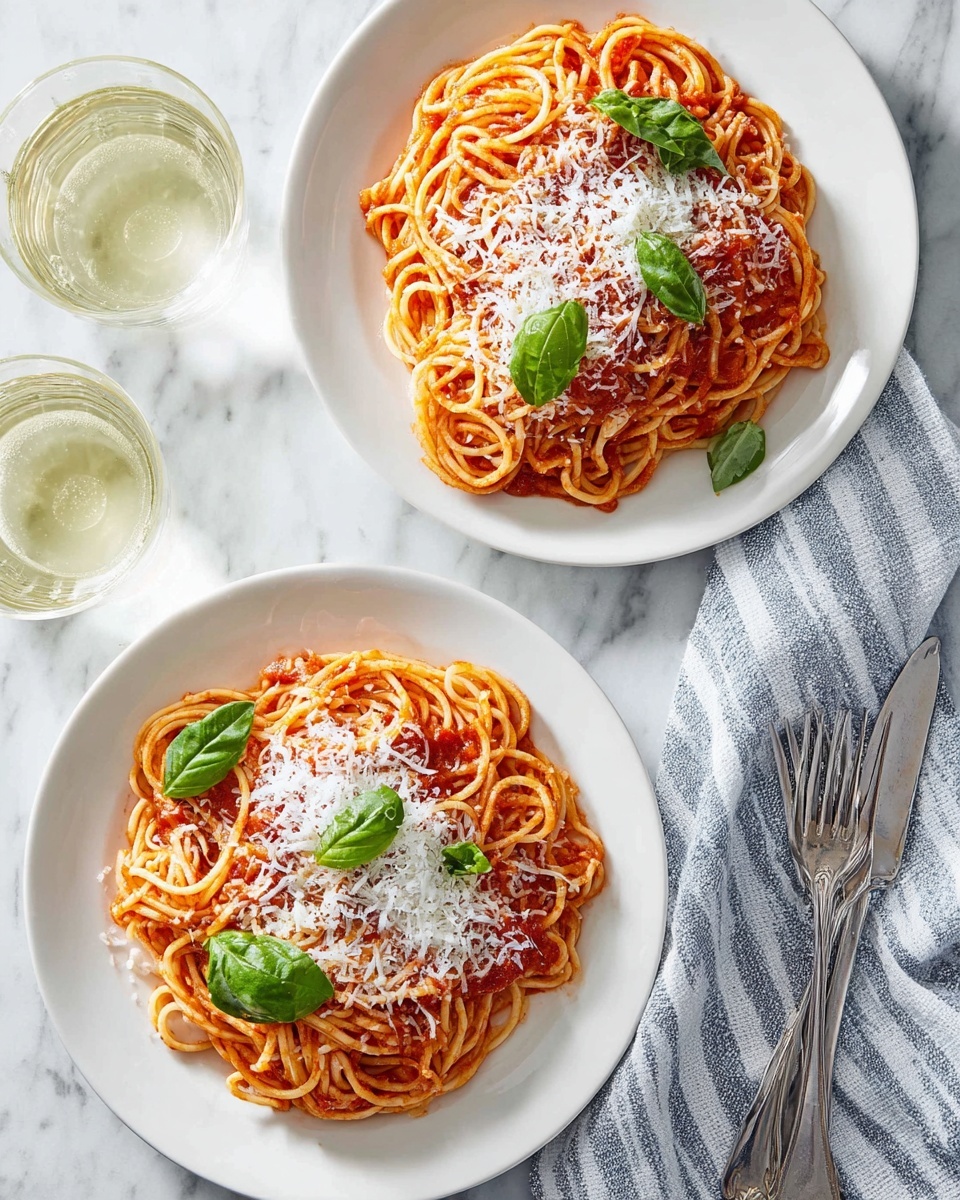
Divide the pasta into warm bowls and spoon any extra sauce on top. If you’re a Parmesan fan, sprinkle freshly grated cheese over each serving, along with some fresh basil leaves for that pop of color and freshness. Grab a fork and enjoy—you’ve made a dish that tastes like an Italian trattoria right in your own home.
Pro Tips for Making Easy Spaghetti Pomodoro Recipe
- Keep an Eye on the Garlic: I learned not to rush this step; gently infuse the oil to avoid burning and bitterness for the best flavor.
- Use Whole Peeled Tomatoes: Crushing them yourself allows you to control the texture and avoid that canned tomato taste.
- Don’t Skip Straining: Pressing the sauce through a strainer makes it silky smooth and more authentic—I swear it’s worth the extra step.
- Save Pasta Water: It’s liquid gold for adjusting sauce consistency and helps the sauce cling to the noodles beautifully.
How to Serve Easy Spaghetti Pomodoro Recipe
Garnishes
I usually finish this dish with a handful of fresh basil leaves and a healthy sprinkle of freshly grated Parmesan cheese. The basil adds that bright, herbal pop, while the cheese balances the acidity of the tomatoes with creamy goodness. If you like a little extra zing, a drizzle of good olive oil or a crack of black pepper works wonders, too.
Side Dishes
I love pairing this spaghetti with a simple green salad dressed with lemon vinaigrette or some garlicky sautéed spinach on the side. A crusty loaf of bread also makes an excellent companion for mopping up the last bits of sauce. When I have more time, roasted vegetables or a Caprese salad complete the meal perfectly.
Creative Ways to Present
For special occasions, I sometimes twirl the spaghetti into neat nests on each plate and garnish each with a whole basil leaf and a small fresh mozzarella ball. Serving the sauce on the side in a small bowl lets guests dollop as much as they like. Adding edible flowers or microgreens also creates a beautiful, Instagram-worthy presentation that’s surprisingly easy.
Make Ahead and Storage
Storing Leftovers
I always store leftover pomodoro sauce separately from the pasta in an airtight container in the fridge. This helps the sauce retain its fresh flavor and texture. Leftover pasta and sauce together can get a bit mushy, so I recommend reheating them separately for the best results.
Freezing
This sauce freezes beautifully. I let it cool completely, then freeze it in portion-sized containers or freezer bags. When I’m ready to use it, I thaw in the fridge overnight and warm it gently on the stove, stirring occasionally. Freezing saves me a ton of time on busy nights while keeping that homemade taste.
Reheating
To reheat, I warm the sauce over low heat until it’s gently bubbling, adding a splash of water if it feels too thick. Then I freshly boil some spaghetti and toss them together just like the original cooking method. This way, the pasta tastes just as fresh as the first night.
FAQs
-
Can I use fresh tomatoes instead of canned for this recipe?
Yes, you can! However, fresh tomatoes require longer cooking times to break down and develop sweetness, so plan to simmer them for at least 1 to 1.5 hours. Using ripe Roma tomatoes gives the closest flavor to canned whole peeled tomatoes, but canned are more consistent and convenient for a quick weeknight meal.
-
What’s the best pasta to use for spaghetti pomodoro?
Traditionally, spaghetti works beautifully because its long strands pick up the sauce nicely. But feel free to use linguine, fettuccine, or even penne if you prefer. The key is to cook your pasta al dente so it has a little bite and doesn’t get mushy when tossed with the sauce.
-
Is the red pepper flakes optional in this recipe?
Absolutely! I include a pinch for subtle heat, but if you’re cooking for kids or prefer no spice, you can leave it out without affecting the integrity of the sauce. It’s all about your taste preferences.
-
Can I prepare the sauce in advance?
Yes! The pomodoro sauce can be made a day or two ahead and stored in the fridge. In fact, the flavors often deepen when it rests. Just warm it up gently before tossing with freshly cooked pasta for the best result.
-
How do I avoid watery sauce?
Simmer the sauce uncovered or partially covered to allow excess liquid to evaporate. If your tomatoes are very juicy, patience is key—let it reduce slowly for that rich, thick texture. Adding a splash of pasta water at the end helps balance it perfectly without making it watery.
Final Thoughts
This Easy Spaghetti Pomodoro Recipe has truly become my go-to for a comforting, no-fuss dinner that feels special every time. The way those simple ingredients come together to create something so satisfying is pure magic in my book. I hope you’ll enjoy making and sharing this recipe as much as I do—it’s one of those dishes that brings a little sunshine and warmth to any table. So grab your garlic, tomatoes, and basil, and dive in—you’re about to create pasta perfection!
Print
Easy Spaghetti Pomodoro Recipe
- Prep Time: 5 minutes
- Cook Time: 60 minutes
- Total Time: 65 minutes
- Yield: 4 servings
- Category: Main Course
- Method: Stovetop
- Cuisine: Italian
- Diet: Vegetarian
Description
Pasta Pomodoro is a classic Italian dish featuring a simple yet flavorful tomato sauce made from whole peeled tomatoes, infused with garlic, red pepper flakes, and fresh basil, tossed with al dente spaghetti. This comforting weeknight meal balances the savory depth of cooked tomatoes with fresh herbal notes, perfect for a quick and satisfying dinner.
Ingredients
For the Sauce
- 6 tablespoons extra virgin olive oil
- 1 garlic clove, lightly crushed and peeled
- 1 pinch red pepper flakes (optional)
- 1 (28-ounce) can whole peeled tomatoes
- Kosher salt, to taste
- 1 basil branch, plus more leaves for garnish
For the Pasta
- 1 pound spaghetti (or packaged pasta of your choice)
- Freshly grated Parmesan cheese, for serving (optional)
Instructions
- Soften the garlic: In a large saucepan over medium-low heat, warm 1/4 cup of the olive oil with the garlic until it sizzles, about 2 minutes. Add a pinch of red pepper flakes and press the garlic to release its flavor, but do not let it brown. For a milder flavor, remove the garlic and keep the infused oil in the pan; leave the garlic in for a bolder taste.
- Add the tomatoes: Carefully pour in the whole peeled tomatoes with their juice. Use a potato masher or sturdy wooden spoon to break the tomatoes into large pieces. Season with 1/2 teaspoon kosher salt and increase the heat to medium-high. Bring the mixture to a boil, then reduce to maintain a gentle simmer.
- Simmer the sauce: Partially cover the pan and cook, stirring occasionally, for 35 to 40 minutes until the tomatoes darken in color and the sauce thickens. The olive oil should begin pooling on the surface. If the sauce thickens too quickly before tasting sweet and rich, add a small splash of water.
- Process the sauce: Turn off the heat and allow the sauce to cool for 10 minutes. Strain the sauce through a fine mesh strainer or food mill set over a bowl, pressing the tomatoes to create a smooth sauce. Return the strained sauce to the pan, taste, and add more salt if needed.
- Season: Stir in the remaining 2 tablespoons of olive oil. Lay the basil branch on top of the sauce and bring it to a gentle simmer over medium heat. Cook gently for about 15 minutes to infuse basil flavor, then discard the basil branch. Add extra fresh basil leaves if desired. Cover the pan to keep the sauce warm.
- Cook the pasta: Bring a large pot of water to a rolling boil, salt it generously, and cook the spaghetti according to package instructions until just al dente.
- Combine pasta and sauce: Using a pasta fork, tongs, or skimmer, transfer the pasta directly to the pan with the sauce. Add a splash of the reserved starchy pasta water and turn the heat on low. Toss the pasta and sauce together and cook for about 2 minutes until the noodles are well coated and cooked through.
- Serve: Divide the pasta into bowls and spoon any remaining sauce on top. Garnish with freshly grated Parmesan cheese and basil leaves, if using. Enjoy your comforting Pasta Pomodoro!
Notes
- This simple yet comforting weeknight dinner recipe hits all the right notes, providing a lovely balance between savory depth and fresh tomato flavor.
- For a milder sauce, remove the garlic after infusing the oil; leave it in for a stronger garlic taste.
- If the sauce thickens too fast without developing flavor, add a splash of water to balance the consistency.
- You can use any long pasta you prefer besides spaghetti, such as linguine or fettuccine.
- Fresh basil added at the end gives the sauce a fresh herbal lift—add more to taste.
- Parmesan cheese is optional but adds a delightful richness to the dish.
Nutrition
- Serving Size: 1 serving
- Calories: 625 kcal
- Sugar: 5.5 g
- Sodium: 155 mg
- Fat: 22.9 g
- Saturated Fat: 3.2 g
- Unsaturated Fat: 18.4 g
- Trans Fat: 0 g
- Carbohydrates: 89 g
- Fiber: 4.7 g
- Protein: 15.6 g
- Cholesterol: 0 mg